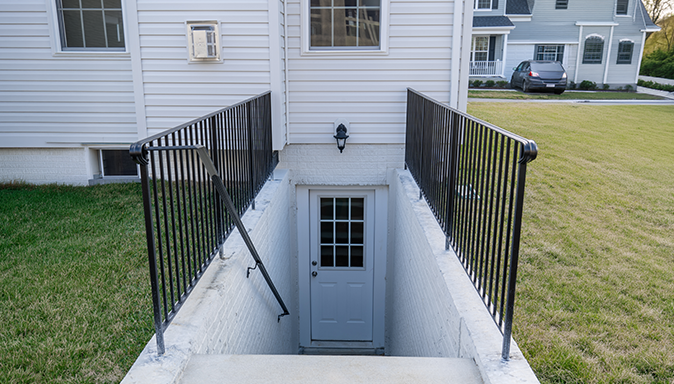
If you’ve got a humid basement, it doesn’t just feel uncomfortable—it could be harming your home and your health.
Excess moisture in lower levels can cause musty odors, condensation on pipes and windows, mold growth, and damage to your belongings. The good news? Many basement humidity problems can be improved with practical DIY projects that help control moisture at the source. If your basement feels damp or sticky, these DIY fixes can help dry out your space so it’s a nicer place to hang out.
Start by Identifying the Source of Moisture
Signs of excess humidity include peeling paint, damp cardboard boxes, musty smells, condensation on surfaces, or visible mildew.
Before you grab your toolkit and start making repairs, take some time to figure out where the humidity is coming from. In many homes, basement moisture can be tracked back to these common issues:
• Humid outdoor air entering through gaps and cracks
• Condensation forming on cold pipes
• Water seeping through foundation walls
• Poor drainage around the home
• Air leaks around basement windows and doors
• Lack of ventilation
Ideally, your basement should be below 60% relative humidity. To get an accurate read, pick up a hygrometer to monitor basement humidity levels. Just mount this simple tool on the wall or place it on a shelf and it will continuously read the surrounding air’s moisture level so you can easily track if your basement is too damp or within the healthy range.
Fix #1: Use a Dehumidifier
The first and easiest fix is to physically reduce moisture from the air. Running a dehumidifier can make a major difference in your basement, especially if you use it correctly. For best results, set it up away from walls, keep doors and windows closed, clean the filter regularly, and be sure to empty the collection bucket regularly or, even easier, connect a drain hose so it doesn’t shut off. If your basement has multiple rooms, running a fan can keep air circulating more evenly. To choose a unit that’s the right size for your space and moisture levels, check out this handy guide from Consumer Reports.
Fix #2: Seal Air Leaks Around Basement Windows and Doors
One of the easiest DIY projects in the fight against humidity is sealing gaps that let humid outdoor air into your basement. Check around basement windows, doors, dryer vents, and areas where pipes and utilities enter the basement for drafts or visible gaps, and seal them to block humid air from entering. Foam weatherstripping works best on movable areas like doors and windows that open and close, while caulk is the choice for gaps around window frames and cracks in the foundation.
Fix #3: Insulate Cold Water Pipes
When it comes to causes of humidity, cold water pipes may not be on your radar but they are one of the most overlooked sources of basement moisture. During warm weather, humid air condenses on cold pipes, creating dripping water that increases moisture levels. Foam pipe insulation is an inexpensive fix that stops condensation while improving energy efficiency. Our pre-slit tubular pipe insulation and tees and elbows are easy to install — they are self-sealing, so all you need is a pair of scissors or a sharp blade to cut the tubes to the right size. Watch this video for step-by-step installation tips:
Fix #4: Improve Exterior Drainage
If rainwater pools near your home’s foundation, moisture can slowly seep through basement walls and floors, sending humidity levels soaring. After a heavy rain, walk around your home checking for overflowing gutters, downspouts that are dumping water near the foundation, low spots where water collects, and areas where soil slopes toward your home. You can improve drainage by cleaning gutters regularly, extending downspouts at least 6 feet away from the house, regrading soil so it slopes 5%, or about a 1-inch drop for every foot as you move away from the side of the house, and installing splash blocks. Check out this post for easy DIYs to keep your basement dry.
Fix #5: Seal Foundation Cracks
Small foundation cracks can let in a surprising amount of moisture and humidity. Hairline cracks can be repaired with Mortite Caulking Cord, a pliable rope caulk that you push into place with your fingertips. If gaps are deeper, press Caulk Saver in to fill the space before sealing with caulk. Larger structural cracks should be evaluated professionally.
When to Call a Professional
While these DIY projects can solve many humidity problems, there are some issues that require professional help. Call a contractor if you notice standing water, mold growth, or bowing foundation walls, or if you experience repeated flooding.