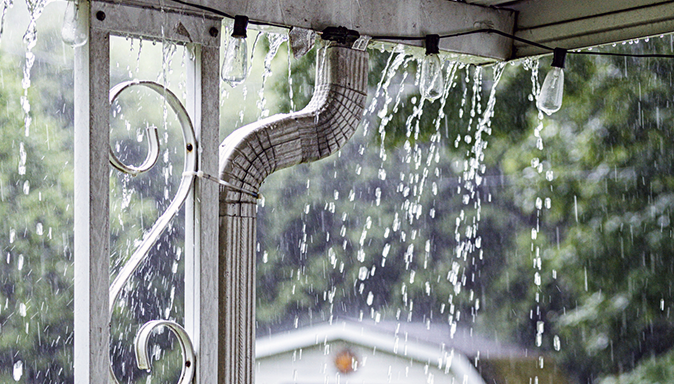
Spring has (finally!) sprung! Flowers are blooming, birds are singing, and snow flurries have turned to spring showers … and that means your home is at risk of water damage.
All it takes is a leaky roof, clogged gutters, or poorly directed downspouts and you’ve got a costly repair project on your hands. The good news? Protecting your home from water damage doesn’t have to be expensive or time consuming. A little vigilance and a few proactive DIY upgrades are all it takes to mark your home as safe from April showers.
1. Keep Your Gutters Clear
Gutters are your home’s first line of defense against water damage, but if they’re clogged with leaves, twigs, and other debris, they can’t do their job. Cleaning gutters might be a chore you dread, but this simple task is one of the most effective things you can do to prevent damage to your roof, siding, and foundation. For a long-term solution, add gutter guards to keep debris out and rainwater flowing freely. Once installed, these protective covers will cut down on the number of times you’ll need to climb a ladder to scoop out leaves.
2. Direct Water Away From Your Foundation
Even clean gutters won’t protect your home if water isn’t directed away from it and into your yard. When rainwater pools near your foundation, it can lead to cracks, mold, and even basement flooding. That’s where our Tilt and Drain downspout extender comes in: It easily attaches to your existing downspout, adding an extra 3–6 feet of reach and can swivel 180 degrees so you can easily direct water exactly where you want it to go.
3. Inspect Your Roof and Flashing
For most of the country this was a long, hard winter. All that snow and cold weather may have taken a toll on your roof, so make sure it’s ready to stand up to spring showers. Do a visual inspection to look for cracked or missing shingles or areas where water is pooling and not draining. You don’t need to climb up on the roof — just grab a pair of binoculars and do a quick visual scan. You should also check for loose flashing around chimneys, vents, and skylights as well. If you notice any issues, get them repaired before they lead to expensive leaks and water damage.
4. Seal Gaps Around Windows and Doors
Spring rain can find its way into your home through tiny gaps around windows and doors. Adding weatherstripping or caulk stops leaks—and as a bonus it helps with energy efficiency and keeps your heating and cooling costs down.
5. Check Your Sump Pump and Drainage System
If your home has a sump pump and drainage system in the basement, it’s critical to keep them in good working order, because a malfunctioning pump or clogged drain can quick turn a rainy day into a flooded basement. Test your sump pump by pouring water into the pit to make sure it turns on properly and check that there’s no debris clogging the drain lines. This simple test can save you thousands of dollars in water damage repairs. For extra peace of mind, add a backup battery so your sump pump will run even when the power goes out.
6. Fix Improper Grading
Water always looks for the path of least resistance, flowing downhill whenever it can. If the soil around your home slopes towards the house, rainwater will naturally head for your foundation. You can redirect it by grading the soil away from your home—aim for about a 5% slope, or a 1-inch drop per foot, for the first 6-10 feet from the house.
7. Inspect and Maintain Your Exterior Siding
Your roof and foundation aren’t the only vulnerable spots in your home. Rainwater can sneak in through damaged or aging siding, too. Walk around your home and look for cracked, warped, or loose siding panels or shingles. Small gaps can be sealed with exterior caulk. An added bonus? These fixes don't just prevent water damage, they also boost your curb appeal, making them a win-win for your home.
8. Plan for Regular Maintenance
Protecting your home from water damage isn’t a one-time project—it’s an ongoing process. Set aside time to regularly inspect gutters, downspouts, roofs, and drainage systems. This regular maintenance reduces the risk of costly emergencies and allows you to handle minor issues yourself without calling in the pros.