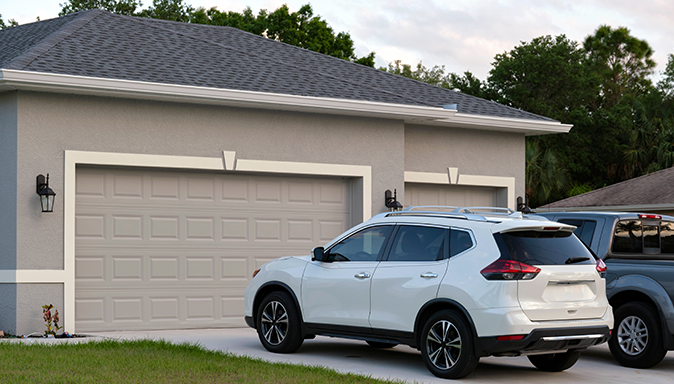
When you think about the sources of energy loss in your home, the same old culprits probably come to mind: drafty windows, an old front door:
Maybe an under-insulated attic. But if you’re like most homeowners, you probably haven’t even thought about the energy that’s leaking from your garage.
For homes with attached garages, the garage isn’t just a place to park your car or store sporting equipment and garden tools. It’s a big, uninsulated buffer zone between the outdoors and your living spaces. And when that buffer is poorly sealed, it becomes one of the easiest ways for heat to sneak in and warm up your home during the hot summer months.
Why your garage matters more than you think
An attached garage shares at least one wall and a ceiling with your home’s air conditioned space. That means outside air that sneaks into the garage through unsealed gaps and cracks is flowing right into your home, forcing your HVAC system to work harder than it needs to. That translates directly into higher energy bills and more wear and tear on your AC unit.
The hidden airflow pathways
Garages are full of small pathways that give hot, humid air a way into your home. The most common include:
• The door between the garage and the house
• Electrical outlets and light switches and holes for utility lines that are on shared walls between the garage and living spaces
• Attic spaces and bonus rooms that extend over the garage
• The garage door itself, which is often not airtight
On their own, each of these gaps is a minor issue. But add them all together and you’ve got a major source of air leaks on your hands.
The garage door problem most homeowners ignore
Your garage door is the largest moving component in your home—and also one of the leakiest. Even high-quality insulated doors don’t seal perfectly without a little TLC. This is where Frost King’s line of garage accessories can help.
4 easy ways to air seal your garage
Making your garage a more efficient space doesn’t require a full-on renovation. These four easy and inexpensive DIYs can quickly reduce energy loss and improve comfort in nearby rooms.
1. Seal the garage door perimeter first
Start with the biggest opening: your garage door.
Over time, the garage door bottom seals and side seals on your door deteriorate, creating gaps that let in outside air, dust, moisture, and even pests. How do you know if it’s time to replace them? If you can see daylight under or around the garage door or feel a noticeable draft when it’s closed, the seals are no longer doing their job and it’s time to replace them.
Replace worn garage door bottom seals with a flexible rubber or garage door bottom seal. We make a product for metal doors that easily slides into the channel at the bottom of the door and one for wooden doors that you nail on.
Next, inspect the side and top seals to make sure they don’t gap when the door is closed. If they’re brittle or loose, replacing them will make your garage more air tight.
2. Air-seal the shared wall
The wall between your home and garage deserves special attention. Seal any visible cracks, gaps, or penetrations with caulk or expanding foam. Add outlet and switch sealers behind the face plate of outlets and light switches on shared walls, and caulk around holes for electrical and plumbing lines.
3. Don’t forget the garage ceiling
If you’ve got living space above the garage, sealing the garage ceiling is critical. Gaps around light fixtures, framing, or an attic access hatch let warm outside air flow right into your rooms, making your air conditioner work overtime to keep it cool. A little air sealing goes a long way here: caulk small gaps around light fixtures and recessed lights, seal larger cracks with spray foam, and install weatherstripping around attic hatches.
And while we’re talking garage ceilings, consider upgrading traditional incandescent fixtures with LED lights. This swap won’t help with air leaks, it can reduce your overall energy use, generate less heat, and help keep utility costs in check.
4. A simple habit that makes a big difference
The single most effective thing you can do to stop air leaks won’t cost you a penny. If you keep the garage door open when you get home from running errands or are outside doing yard work, you’re giving hot outside air an easy way into your living spaces. Start thinking of your garage door as an exterior door and make sure you close it every time you go outside or come home.
Why improvements to your garage deliver outsized impact
Sometimes, the most effective energy efficiency improvements don’t require major investments or full-system upgrades — the biggest gains come from overlooked spaces that you haven’t even considered a problem. For most homeowners, the garage is one of those spaces. And with a few targeted fixes, especially at the door perimeter, you can shift it from an energy hog into a space that makes your home more comfortable all summer long.